

Clifton Loft Conversions
Transform Your Home With A Quality Attic Conversion
Get In Touch Today
If you’re looking for professional loft conversion services from a trusted and experienced local company, look no further. Our team are professional local loft conversion specialists covering Clifton and the surrounding areas who will deliver a high-quality solution that will exceed your expectations.
For more details or to get a free quote phone today or simply complete the form and someone will get back to you to discuss your requirements.
Are you frustrated with the lack of living space, and insufficient storage?
Have you got an attic that isn’t being used in your Clifton house?
Do you want extra storage or living space in your house but unable to move or extend outwards?
How would it feel to increase your property’s value by as much as 25%?
- Converting Your Loft?
- Why Convert Your Attic Into An Additional Room?
- What Are The Main Types Of Loft Conversions Available?
- Dormer Loft Conversion
- Hip-To-Gable Style Loft Conversion
- Mansard Style Loft Conversion
- Roof Window Or Velux Loft Conversion
- What Type Of Loft Conversion Is Best Suited To My House?
- Loft Conversion Services Frequently Asked Questions
A Loft conversion could be the answer that you are looking for. Loft conversions have become a popular choice for those who need more space, particularly for growing families and people who can’t afford to move to larger houses. The cost of converting a loft is less than moving home and it also allows you to increase your living space without affecting any of your surrounding property, it can also help increase the value of your house. A Loft Conversion can boost your property’s value by up to 25%, making it very likely that you will make money on your loft conversion long term.
There are many ways that a loft conversion can help you add more space to your home, such as a master bedroom or guest room, a home gym, a teenage den, a home office or just to make your home more functional.
Converting Your Loft?
A loft conversion or roof extension in Clifton is a cost-effective way to add more space to your home. The space is already within your home and just waiting to be used. You can transform the unused loft space into an additional space that you can use. You can convert it into a master suite with an ensuite, an office, a bedroom for children, a hobby or games room, or even a home cinema.
Why Convert Your Attic Into An Additional Room?
Loft conversions are a great addition for any home. The most important benefit is the extra living space that it provides. You may need another room if you have a growing family. You may also want to be able welcome your family members on weekends or holidays. This area could also be used as a luxury private gym or playroom for your children. Converting your attic can not only increase your home’s living space but also increase its resale value. Other benefits of loft conversions include:
- Loft conversions are a great way for you to increase the value of your property. They can add up to 25% on its value.
- Your loft conversion may be customised to meet your particular needs and requirements. You can create the space that best suits your lifestyle.
- Loft conversions have been designed to be more environmentally friendly and comfortable.
- No need to move house. A loft conversion is a great alternative to moving.
- A loft conversion can help you make the most of the space that you have instead of adding or extending.
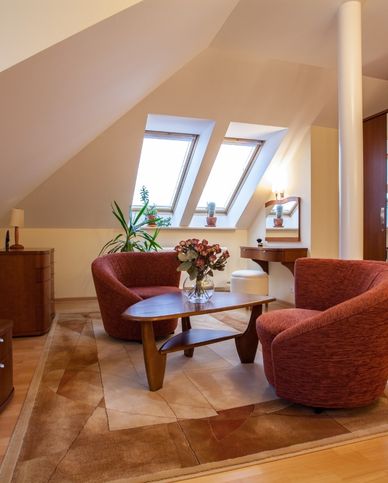
- Loft conversions often feature skylights and Velux Windows, which provide more natural light and allow for brighter living spaces.
- Loft conversions can be designed to meet a wide range of needs. They can be used as bedrooms, bathrooms, home offices, or playrooms.
- A loft conversion requires less maintenance than a traditional extension. It is therefore a low-maintenance solution for adding extra space to your house.

For a FREE no-obligation quote for any of our loft conversion services in Clifton get in touch today.


What Are The Main Types Of Loft Conversions Available?
The type of loft conversion that you can create depends on the type of house that you live in. The area you live in will also determine what sort of planning permission is required. You can include, bathrooms, wet rooms or stunning natural light designs and much more.
There are 4 main types of loft conversions that can be done: Dormer Loft Conversion, Hip to Gable Loft Conversion, Mansard Loft Conversion and Velux Loft Conversion. Each has advantages and disadvantages depending on which type will work best with your existing house structure.
Dormer Loft Conversion
Dormer loft conversions have become a very popular choice of conversions in the UK. These are the most cost-effective way to increase your home’s size.
The roof’s sloped side can be altered to create vertical walls and a flat roof to increase the area’s underhead height. Your new loft will make it easier to walk in, especially for tall people. Most of these loft conversions will be eligible under your permissible development rights.
Hip-To-Gable Style Loft Conversion
This may sound complicated, but it is really not. A hip-to–gable loft conversion simply involves the raising of one roof hip to provide more space below the floor.
From the existing gable, a vertical wall is constructed. This allows for substantial room height improvements.
Mansard Style Loft Conversion
Mansard loft conversions completely replace one half of a property’s roof, while keeping the other half’s roof structure.
Because it is built into the existing house structure, this method converts your loft in a more artistic way than a dormer extension.
Because of their extensive nature and real added space, Mansard loft conversions are a great way to increase the value of your home. They require full planning permission applications to your Local Planning Authority, due to the extensive restructuring they entail.
Roof Window Or Velux Loft Conversion
This is the easiest way to convert your loft. Because they do not require any roofing changes, roof windows are extremely popular. Your roof frame will stay the same, so all you need to do is insert a skylight directly into your roof’s covering. Natural light will make your attic more useful as the Velux window acts like a skylight.
What Type Of Loft Conversion Is Best Suited To My House in Clifton?
Not every type of loft conversion is suitable for every house. Dormer or Velux, are suitable for all kinds of property. Mansard lofts, however, are better suited for semi-detached or detached homes due to the extra construction space they require.
The same applies to hip-to-gable lofts. They are best suited for detached, semi-detached and end-terraced houses.
For a FREE no-obligation quote for any of our loft conversion services in Clifton get in touch today.
Loft Conversion Services Frequently Asked Questions
Where do you put stairs for a loft conversion?
Usually, the stairs to your loft conversion are best placed over the existing staircase in terms of convenience and efficient use of space. If this is not possible, a small room or part of a large room may be sacrificed to accommodate the stairs.
What lofts Cannot be converted?
As a general rule, 2.2m from floor to ceiling at its highest point is the threshold for undertaking a loft conversion. If your loft does not meet this requirement, it's highly unlikely you'll be able to raise your pitch roof, since councils very rarely grant permission to do that.
How long does a loft conversion take?
On average, loft conversions can be done in as little as 4 weeks or may take up to 8 weeks, with certain styles less complex than others. Here are the different loft conversion types, broken down by a rough time estimation: Roof light conversions – 4 weeks on average. Dormer conversions – 5 weeks on average.
Can I stay in house during loft conversion?
If you want to stay in your home during a loft conversion, we say it's perfectly possible. You just need to be realistic about the work that will be undertaken.
Can I use my loft as a bedroom?
But when it comes to being a bedroom, a converted loft room cannot be called a bedroom merely because it offers enough space to fit a bed in, or because one has been put in there: a loft needs to be converted for the purposes of being a sleeping area, and in accordance with building regulations, in order to be called a bedroom